
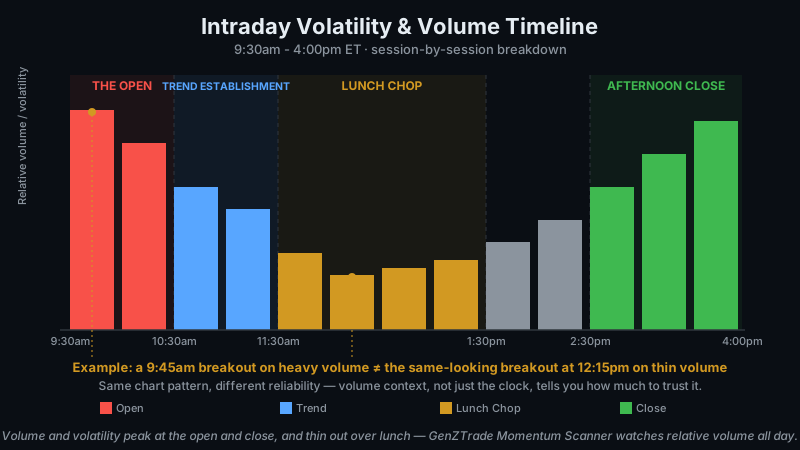
In one sentence: The trading day isn't one flat six-and-a-half-hour block — volume and volatility move in a predictable arc, heaviest at the open and close, thinnest in the middle, and knowing which window you're in changes how much you should trust what the chart is telling you.
The market doesn't trade the same way all day
New traders tend to treat 9:30am and 2:45pm as interchangeable — same ticker, same chart, same rules. They're not. The amount of money moving through a stock, and how cleanly price reacts to it, changes shape over the course of the day, and that shape repeats often enough to plan around. All times below are ET.
9:30-10:30am — The open. This is the highest-volume, highest-volatility window of the regular session. Overnight news, pre-market positioning, and the first wave of institutional orders all land at once, so price can move fast and hard in either direction. This is where the most opportunity exists, but it's also where the most noise lives — the opening range is still forming, and a lot of the moves in the first several minutes are fakeouts that reverse before the range even settles.
10:30-11:30am — Trend establishment. Once the initial open volatility burns off, this is often where the actual trend for the day starts to show itself. The false moves from the open get resolved, and the stocks that are genuinely in play tend to reveal their real direction here rather than the random noise of the first few minutes.
11:30am-1:30pm — Lunch chop. Volume typically drops off noticeably from the open as institutional desks quiet down over the midday stretch — fewer large orders working, less urgency, less follow-through on moves. This is when false breakouts and choppy, directionless price action become more common, and it's generally the hardest window for newer day traders, because setups that would work cleanly at 9:45am often just stall out or whipsaw here.
2:30-4:00pm — Afternoon positioning into the close. Volume often picks back up as the session heads toward the closing bell, with desks squaring up positions and repositioning ahead of the next day. Sometimes this continues the morning's trend, sometimes it reverses it entirely — but either way, there's real size moving again, which is the main thing that separates this window from the lunch stretch.
Why volume moves this way
This pattern isn't random and it isn't superstition — it's a direct result of how institutional order flow is scheduled. Large funds and desks concentrate their execution at the open and close because that's when liquidity is deepest and price discovery is happening fastest, which lets them move size without moving the price against themselves too badly. In between, there's less structural reason for big orders to hit the tape, so volume naturally thins out. Retail activity follows a similar shape, just at smaller scale — people check the market at the open, check it again near the close, and pay less attention to the middle of the day. Less volume means less conviction behind any given price move, which is exactly why midday breakouts fail more often than they follow through.
What this means practically if you're newer to this
None of this means you can't trade midday, and it doesn't mean the open is automatically safe just because it's active. What it means is that the bar for a setup needs to shift depending on which window you're in. A breakout at 9:45am with heavy volume behind it is a different animal than the same-looking breakout at 12:15pm on thin volume — the pattern can look identical on the chart while meaning something completely different underneath. During the lunch window specifically, you want to be more skeptical by default: demand clearer volume confirmation before you trust a move, and accept that a lot of what happens between late morning and early afternoon is going to be noise that doesn't deserve a trade. Being patient enough to sit out the chop is a skill in itself, and it's one that saves newer traders from a lot of setups that looked fine and went nowhere.
How GenZTrade helps you find these setups
The hard part about session timing isn't knowing the general pattern — it's knowing whether the volume you're looking at right now is actually normal for that time of day, or whether it's unusual enough to matter. The Momentum Scanner is built around relative volume, not raw volume, which is what actually solves this. A stock trading heavy volume at 12:30pm when nothing else is moving is a real signal, even though 12:30pm is normally the quiet stretch of the day. The scanner surfaces that kind of setup regardless of what time it happens to be, so you're not stuck guessing whether the activity in front of you is meaningful or just typical midday drift.
Bottom line
No session on its own guarantees a good trade. The open gives you volume and volatility, but also fakeouts. The late-morning stretch often shows the real trend, but not every day has one. Lunch is usually the hardest window to trade well, and the close brings volume back but not always in the direction you'd expect. Timing tells you how much to trust a move, not whether to take one. Chasing volatility for its own sake — jumping in just because it's 9:32am and everything's moving — loses money exactly as fast as chasing a dead setup at noon. The setup has to be real first. The time of day just tells you how skeptical to be while you're looking at it.
Comments (0)