
In one sentence: Every options strategy has a home. Pick the one that matches today's market regime and the same setup that would have lost becomes the setup that pays.
What this actually is
Two traders take the same setup on the same ticker with the same strike. One makes 40 percent on capital in three days. The other loses 60 percent in the same three days. What was different was the market regime around them. This is the part of options trading nobody teaches with the seriousness it deserves. Strike selection matters. Delta matters. Implied volatility matters. But regime alignment is what determines whether you are structurally getting paid or structurally getting bled.
Think of using the wrong options strategy in the wrong market like wearing flip-flops to shovel snow. The tool matters as much as the effort. Long calls on a chop day get eaten alive by theta. Iron condors on a trending market get run over by the trend. The mechanical trade might be executed perfectly and still lose because it did not belong in that environment.
The insight: IV rank tells you if premium is expensive. Regime tells you which side of the IV trade you want to be on. Both must align. High IV rank in a chop regime is the ideal setup for premium selling. Low IV rank in a bull regime is the ideal setup for premium buying. Cross-wire them and the edge disappears.
The picture
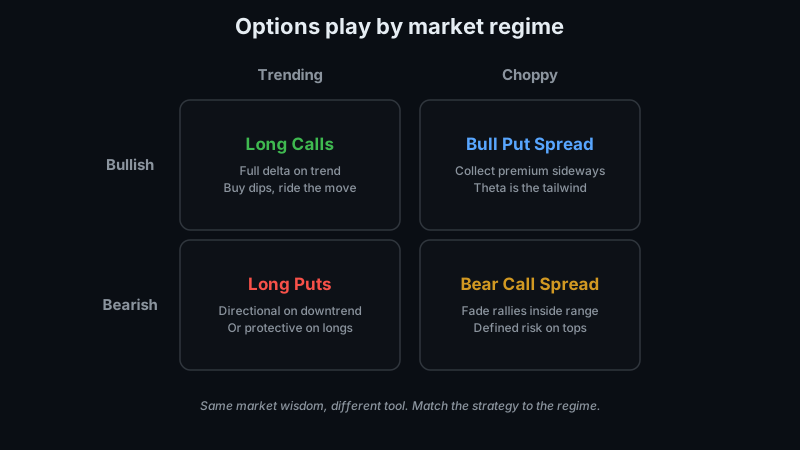
The diagram above is a 2x2 matrix. Rows are the direction: bullish or bearish. Columns are the tape: trending or choppy. Each cell is the strategy that has a home there. Bullish and trending gets long calls. Bullish and choppy gets bull put credit spreads. Bearish and trending gets long puts. Bearish and choppy gets bear call spreads. Four cells, four strategies. Match the environment to the tool.
A real example: VIX at 12 vs VIX at 28
Scenario one: VIX is at 12, SPY is up 8 percent over the last month, no big catalyst on the calendar. That is a bull-trending regime with cheap volatility. Long calls on quality names work. Buy a moderately in-the-money call at a reasonable expiration on a stock that just broke out on volume. Full delta exposure. Premium is cheap so time decay is manageable.
Scenario two: VIX is at 28, SPY has been chopping in a 3 percent range for two weeks, no clear direction. That is a chop regime with elevated volatility. Long calls die from theta bleed even if you get the direction eventually right. Iron condors and bull put spreads earn their reputation. You collect the elevated premium and profit if price stays inside your range. Same market wisdom, different tool.
The video above walks through this decision live inside GenZTrade's Options Plays panel, showing how the regime auto-tag filters the suggested strategy list to the ones that fit today's environment.
When it works best
- You classify the regime before you look at any ticker. The regime tag drives strategy selection. Setup selection comes after. Not the other way around.
- You respect the IV rank overlay. Cheap premium favors buying strategies. Rich premium favors selling strategies. The regime tells you which fits the tape.
- You skip strategies that fight the regime. No long calls on chop days. No iron condors in strong trends. No leveraged directional bets during volatile regime.
The rules that keep you profitable
Match the strategy to the regime, not to your mood
Bull regime is where directional bullish plays finally pay for themselves. Long calls when IV rank is below 30. Bull call spreads when IV rank is 30 to 60. Cash-secured puts on names you would own if assigned. Do NOT sell iron condors in a strong bull - the upper call spread keeps getting pressed and you will be right on direction and still lose.
In chop regime, income takes over
Sell short-dated credit spreads on quality underlyings above their 50-day moving average with clear technical support below the short strike. Sell iron condors on SPY and QQQ weeklies. Skip long calls entirely - theta bleed dominates when the underlying is not moving.
In bear regime, cut leverage before you cut anything else
Leveraged ETFs are lethal in bear regime because the leveraged decay compounds against you every session. Any leveraged long ETF exposure should be sized down or off entirely. Buy long puts or bear call spreads for directional exposure. Buy protective puts on existing longs.
In volatile regime, size everything down and wait for resolution
Volatile regime overlays the others. VIX above 30 means every position is exposed to a bigger move than normal in either direction. Tight stops, half size. Wait for the regime to resolve unless the setup is A+ confirmed. Sitting on cash while the market decides is a legitimate strategy.
Common mistakes I see
Buying long calls into chop
Theta destroys a long call on a chop tape. The position can lose 5 to 8 percent of extrinsic value per session without price budging. Two chop days back to back and the position is unrecoverable. The regime tells you not to be there. Listen to it.
Selling iron condors into a trend
Condors need range-bound behavior. When SPY is trending, the upper call spread of the condor keeps getting pressed. You may be right that the market is going up and still lose money on the condor because the trade needs price to stop moving. Save condors for chop.
Buying leveraged ETFs into bear regime
Leveraged decay compounds against you daily in a bear market. A 3x long tech ETF held through a bear regime can lose 30 to 50 percent while the underlying sector loses 15 percent. The instrument itself is the failure mode.
Ignoring IV rank
Buying options when premium is expensive is voluntary edge donation. Selling options when premium is cheap is voluntary edge donation on the other side. The IV rank chip on any setup tells you which direction the premium math is pointing.
How GenZTrade helps you find these setups
- Regime detection auto-tags every session as bull, bear, chop, or volatile based on the structural conditions. That tag drives the Options Plays page.
- Options Plays filters suggested strategies to the ones that fit today's regime. On a chop day, credit spreads and iron condors take priority. On a bull day, long calls and spreads.
- IV rank chips on every candidate tell you whether premium is cheap or expensive so the buying-vs-selling decision is already made for you.
Bottom line
Regime detection removes the "what should I trade today?" paralysis that eats an hour of the morning routine. The tag is set by 10 AM Eastern from the pre-market and opening range structure, and by then the Options Plays page is already populated with regime-matched candidates. You go from staring at a scanner trying to figure out the environment to opening a page that already knows the environment and shows you the plays that fit it. Match the strategy to the regime. Skip the setups that fight the tape. Compound.
Related reading
- Bull put credit spread setup guide (with real trade examples)
- Long call vs bull call spread: when to use which
- How to spot chop days early and switch to income strategies
Frequently asked questions
What is a market regime?
A market regime is the prevailing character of the market: bullish trending, bearish trending, sideways ranging, or high-volatility whipsaw. Options strategies that work in one regime often lose money in another - matching strategy to regime is core to consistent returns.
How do I identify the current market regime?
Use three signals: 200-day moving average slope (up = bull, flat = range, down = bear), VIX level (below 15 = complacent, 15-25 = normal, above 25 = fear), and sector rotation breadth (broad participation = trend, narrow = range or top).
Which options strategy works in a sideways market?
Iron condors and short strangles capture premium from range-bound action. Covered calls generate income on existing positions. Avoid long calls, long straddles, and directional debit spreads - the theta decay compounds against you in a chop.
Comments (0)